
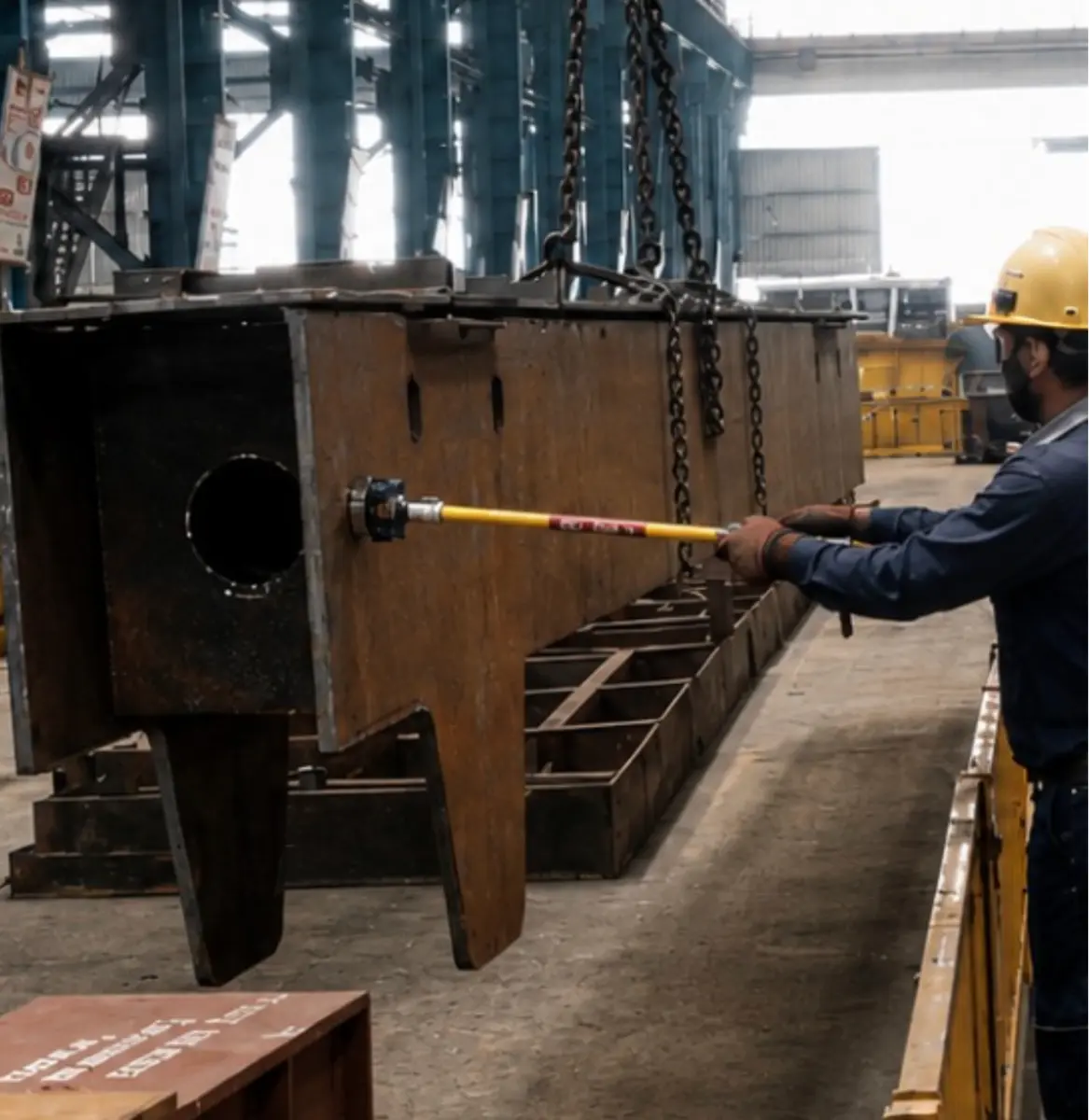
Industrial activity concentrates people, equipment and repeated handling tasks. A mining corridor includes more than the pit: maintenance workshops, fabrication yards, stores, freight depots, port interfaces and contractor bases all form part of the same operating network.
That is why an Australian hand-safety programme should map work rather than count product enquiries. The useful question is where a hand becomes the guide, stopper, holder or alignment device in a repeated task.
Western Australia: a mine-to-port and workshop network
The Pilbara’s bulk ports connect resource operations with export handling. Perth and its surrounding engineering and fabrication areas add workshops and equipment-support tasks. Across this network, component guidance, tubular control and striking-tool holding should be assessed as different functions.
Queensland: resources maintenance meets coastal energy
Queensland combines mine-maintenance tasks, gas-field services and coastal LNG and bulk-handling settings. A tool demonstration is most useful when it reproduces the contact geometry and working distance of an actual task, with operators and the site’s safety and engineering teams involved.
Hunter, Darwin and the southern industrial corridors
The Hunter coal supply chain and Newcastle port interface bring attention to fixed-plant maintenance and equipment handling. Darwin’s offshore-support base introduces deck and mobilisation tasks. South Australian resources operations, Victorian manufacturing and Tasmanian industry provide further settings for the same task-function questions.
Build a register that follows the work
Record the location, task, moving energy, reason for hand contact and existing controls. Determine whether the work can be redesigned or isolated before considering an additional tool. Where an interface is appropriate, document its intended use, trial findings and remaining exposure.
Geography helps procurement; the task selects the tool
Location guides help teams find relevant examples and plan delivery. They do not prove a particular product is suitable. The final selection depends on contact geometry, working space, object condition and the assessed control method.
Read the state guides for locations and source references, then use the catalogue to shortlist a configuration for review.
From reading to application
Describe the task, the moving load and the point where hands approach the hazard. Use the PSC catalogue to identify the relevant function, then request selection support.
Browse PSC & HSF tools ↗ · Australian sources and further reading ↗